
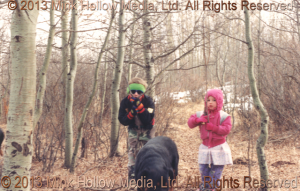
The Convincing Case for Sending Your Kids Outside to Play Alone | Inhabitots.
YES!!!!
A recent story in The New York Times discussed how play has all but vanished from childhood. The article states, “Too little playtime may seem to rank far down on the list of society’s worries, but the scientists, psychologists, educators and others who are part of the play movement say that most of the social and intellectual skills one needs to succeed in life and work are first developed through childhood play.” A great deal of research proves that The New York Times piece is right on. Kids are exposed to some serious problems if they don’t get a healthy dose of free, unstructured play.
- The American Academy of Pediatrics says that a lack of unstructured playtime causes depression and anxiety in children.
- A Stanford School of Medicine study says that kids who miss out on free, unsupervised play also miss out on cognitive, physical, social, and emotional development and well-being as well as self-regulation, empathy, and group management skills.
- Be Out There research notes that children kept from outside play time are less physically active, less creative, more aggressive and have worse concentration.
- Research at the Morton Arboretum notes that symptoms of Attention Deficit Hyperactivity Disorder (ADHD) are worse when children have no contact with nature. This research showed that kids with ADHD who do spend time in nature concentrate, complete tasks, and follow directions better than their peers.
- Kids trapped inside miss out on basic rights of passage, such as forming fun memories, making mistakes and learning how to be brave.
- Children with nothing but screentime have no idea how to manage when screens aren’t available. They get depressed, lose control and have no clue how to entertain themselves. Most kids use the term “Addiction” when describing their screen time, which is a serious problem. In fact this is a con for parents too. Incredibly, there are whole articles dedicated to advising parents how to teach kids to play alone! Seriously?
- A lack of outside play time is linked to stress, vitamin D deficiency and decreased disease resistance in kids.
- Kids who don’t experience free play miss out on memory growth, problem solving skills, language skills, literacy skills, math proficiency and much more.
- Most health organizations directly link the growing childhood obesity crisis to a lack of independent outdoor play. It’s scary to imagine, but the Alliance for Childhood, a play advocacy group, notes that children ages 10 to 16 now spend just 12.6 minutes per day in vigorous physical activity and an average of 10.4 waking hours each day relatively motionless. We’re talking about a generation of kids who are living their entire childhood sedentary, an issue that is directly linked to obesity and many other health problems.
-
Kids who don’t get to be outside will not care as much about protecting the planet once they become adults. One study notes that the most direct route to caring for the environment is participating in “wild nature activities” before the age of 11. (Wells and Lekies, 2006).
