Gamification – The New Chocolate Covered Broccoli?

Approximate Reading Time: < 1 minute

Gamification has some real potential, but it will be discredited before it even gets started if people insist on using it as little more than a new veneer plastered over antiquated methods.

Here’s an article that explains how to use Chore Wars to ‘gamify your classroom”. Except, the problem is that the game is simply being used as a wrapper around the same old industrialized learning.

Gamify your classroom with Chore Wars | Digital Play.
This comment causes me deep concern:

The idea is to encourage the students to do more exam practice tests by making it fun.

Really? Is THAT what you think this is good for? Getting kids to do more tests?


Admittedly a lot of ideas embodied in gamification are not actually new: like choice, detailed progress tracking, earning scores based on performance, moving up to the next level, etc. (I remember using SRA Reading Kits – I LOVED those things).

On the other hand, gamification does provide a handy lens through which to examine these ideas. It provides a framework that I’m finding very useful.

If your understanding of gamification is that it is simply something in which to wrap your same old instruction, try reading up on it some more.


It actually requires some serious re-thinking, if you want to make it meaningful and seamless.

Here are a couple of sources that might help:

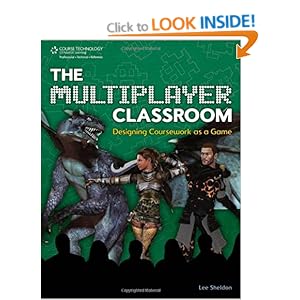
The Multiplayer Classroom: Designing Coursework As A Game

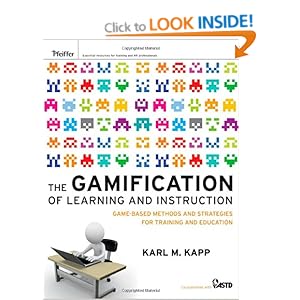
The Gamification of Learning and Instruction: Game-based Methods and Strategies for Training and Education

1 person likes this post.

Telus Spark : If This is Science We are Doomed, Part 2

Approximate Reading Time: 6 minutes

This is part 2 of my two-part tirade on Calgary’s new Telus Spark “Science” Center.

Here’s where I get to talk about the (virtually non-existent) science. In the SCIENCE center.

I almost brought my ipad with me to the brand new “science” center.

It’s a BRAND new facility, right? Museums have come along way in the last 10-20 years. At over $160 million, and after all the hype, I expected it to be a showcase of modern techno-enhanced museum design – you know, the kind with things I can point my phone or ipad at to get more information on whatever it is I’m looking at. Additional images, websites (stuff right on the Telus Spark website even), animations, little podcasts, etc. I figured there’d AT least be wi-fi in the building and little QR do-dads everywhere.

Well, good thing I didn’t bother to bring it. I did not notice anything – that’s right folks, NOT ONE place where I could connect or communicate with a mobile device. In fact, with very few exceptions ALL of the explanations (such as they were) were painted or postered onto some wall or board. The exceptions? A couple of screens that displayed a series of paragraphs. Can you scroll through the text if you read faster than a 6 year old, you might ask? Well NOOOO. You can’t. They are NOT touch screens. Can you go back and re-read something you missed? No siree. It’s just a display screen scrolling through pages of text at a pre-determined rate. (yawn)

As if it isn’t bad enough that the technology being used to present the exhibits all appears to have come from about 10 years ago, most of the exhibits told me ALMOST NOTHING about anything. Want to know more about those core samples? TOO BAD. You’ll have to go elsewhere because this exhibit is not going to be any help.

The blackboard style decor for the signs is cute. You know what would have been cuter? Something that LOOKS like a blackboard but is really a touchscreen that gives patrons access to more information.

Like many of the exhibits – the rocks exhibit COULD have been cool. it COULD have taught people something. (Notice the order in which I said that? Science is COOL! You will NOT get that impression from this museum.)

I realize that we are in Alberta and that everything in Alberta seems to have to have something to do with petroleum, but really. If this “science” center is supposed to be a tourist attraction, then I can maybe see focusing so heavily on all things energy-related, but if it’s NOT, couldn’t we PLEASE PLEASE look at the science of something that ISN’T of interest to the energy industry? I realize that a lot of funding came from the local oil companies (you can tell that because they have plaques all over the building), and there’s really nothing wrong with that, but really, do you have to be that blatant? This does not look like a “science” center so much as “here’s what the oil industry in Alberta wants us to look at”.

OK. It’s not all about oil. There’s a “Being Human” section at this “science” centre. I thought, “Great! I’ve heard about this part – there’s a human sexuality section.”

Sadly, it too isn’t about science. It’s far more sociology than science.

Want to know what blinking has to do with eggs?

I DON’T KNOW. And you won’t find out here.

This exhibit consists of a table and two chairs where you can sit down and have a staring contest.

(I’ll let everyone ponder the “science” of that for a few minutes….)

Esthetics are Important

Esthetics are important. They’re not enough to carry something, but they do matter. Many of the exhibits are quite crappy looking. The industrial look does not make things more sciencey. Mostly, it just makes them look unfinished. This exhibit is supposed to be about how water flows – I think (I can’t remember). Do you suppose they could have done something more esthetically pleasing? This looks like the sink in a high school shop at the end of the day.

When I talk to people about education, I tell them that there are 2 questions that everyone should have a right to ask any time they are being invited to learn something:

What is this Good for? and Why am I doing this?

These are fair questions to ask of a teacher. They are also fair questions to ask any time you are presented with something that is supposed to be educational.

At this “science” center, much of the time, the answer to both questions is: “I DON’T KNOW.” And that’s very sad. Science really is cool, but you’re not likely to get that impression here.

Here’s an exhibit that COULD have been cool. You get some coarse sand in a bin and some balls. The sign above says something about making craters. I recently saw a thing on TV about how to make a crater (here’s a demo that NASA put on youtube).

Telus Spark? Well, they give you material that won’t show you anything about how the force is distributed, but worse yet: the material in the bin is LESS THAN 1/2″ DEEP. You can’t show diddly. Idea: really cool. Design and implementation: FAIL.

Here’s another one:

This one’s about wind and how it flows around. Ever seen a hay field on a breezy day? I have (I get to see one out my living room window). It’s beautiful! Mesmerizing. It looks like an ocean of green waves. I can think of a number of ways to build an exhibit that show us that same amazing effect. Use nylon wire with little ‘seeds’ attached to the top. Do it right and it will look really cool. You could even make the wire be different colours along the shaft so that you can see waves in different colours. Think of the cool things you could do with lighting…..

What did Telus Spark do? They pasted what looks like an old shag carpet on the wall. It moves NOTHING like a real field. It’s awful.

Science Is……

Oh wait! THIS looks cool:
The sign says:

Solar panels convert light into electricity (it doesn’t tell you how though) – the more light that strikes them, the more electricity they generate. We use the electricity generated to make musical notes – transforming light into electricity and electricity into sound energy (again, we’re NOT going to tell you how – because THAT’S SCIENCE).

Another failed opportunity. How about having notes reflect the intensity of the light? Is there some order to the notes and the solar receptacles? If so, WOULD YOU CARE TO TELL US?!

THAT’S WHAT SCIENCE IS ABOUT!!!!

It’s all well and good to “provoke conversation, experimentation and collaboration” but that’s only the FIRST part of what science is about. If you fail to enlighten, you have failed! If you manage to provoke conversation but fail to help us answer our questions, that’s a fail.

The sign says, “Bottle the Sky: Our visitors have been filling these jars with colours to match the sky they see, or to recreate a sky from their memory. The colours all come from natural pigments.”

Do we get to know WHICH pigments and dyes?

Well NO.

Do we get to see any pictures of skies for comparison?

NO, can’t do that either.

Are the coloured bottles arranged in a way that represents a sky?

NOPE

As far as I can see, they are totally random.

What do I learn from this? ……

I get that science is less about the products and more about the process. Believe me, I TOTALLY get it. I’ve been a scientist all my adult life. Among other things, I’ve been breeding rabbits for over 20 years. I study the colour genetics; I breed for production, health, temperament – all of which have a lot to do with genetics and biology (if you care to learn). I study animal behaviour (they call that ethology – and yup, that’s science too). I’m absolutely on board with the notion that process is important. BUT – process without enlightenment is just a bunch of stuff you do. It is NOT science.

Provoking questions and then failing to provide a path to an answer turns people OFF.

Here’s an exhibit where we get to smell stuff. Why? It says that smells evoke memories. How? (which would of course be the science part) IT DOESN’T SAY.

I have another bit of news for you: inquiry based learning is NOT about putting a bunch of crap in front of kids and standing back as they play around with it.

It involves GUIDANCE; it often involves very careful orchestration of “teachable moments” – setting up situations where your learners will face questions they want to answer.

THAT’s when the magic happens! But ONLY if you have some way of helping them find the answers.

Science is not “just a bunch of shit that happens” (= processes). Science is about trying to find out why.

Missed Opportunities

This could be cool. And it is, sort of. But it could be so much more……

This “science” center is filled with missed opportunities. Exhibits that could be really cool, but that miss the mark. This one is kind of cool, but could be so much better – and it would not have cost very much.

There are 3 sliders you can use to alter the effect of the image. They are:

  1. X-Ray
  2. X-Ray and Infrared
  3. X-Ray and visible light

Why can’t you separate out the X-rays, you might ask? Why indeed.

Here’s another one that could have been something more than a toy:

This one says how the size and shape affects the sounds they make. Density also makes a difference – very dense materials vibrate faster which gives you a higher note. It also says that a regular internal structure will cause the sound to resonate longer.

We have a number of materials arranged as xylophones and some things to hit them with. So far so good. I walked over to the one that was all wood – and – sure enough – each block made a different sounds. Cool! What woods are these? IT DOESN’T SAY. They are not arranged in any kind of order that I can tell. No way to get a feel for what the sign says, other than difference in sound – some of them so slight it’s hard to be sure.

Sigh.


This sign hangs above an exhibit that has some foam/bubble thing going on – I didn’t actually check it out – I was more distracted by the behaviour of the people who did…..

Can you guess what EVERYONE we saw did here?

That’s right kids – EVERY single person who came up to this exhibit pulled the orange cord. And nothing interesting happened. Another lost opportunity.

??????

I’ll leave you with this one. If you can tell me what this is and what it has to do with science, please post your answer below, because I really don’t know.

REALLY.

5 people like this post.

Telus Spark : If This is Science We are Doomed, Part 1

Approximate Reading Time: 3 minutes

We visited http://www.sparkscience.ca/ for the first time yesterday.

Everyone in my family is into science – in a BIG way. We also love learning new stuff, and we love having fun. This should make a visit to the science center a fantastic outing.

Where do I begin?

To be fair, we did end up laughing a lot – but mostly it was the kind of laughter you turn to when things are just too pathetic/depressing for words.

The number of squandered opportunities for learning science, or, well, ANYTHING is really quite impressive.

If you want to learn something about science this is NOT (!!) the place to do it.

Also, WAY too expensive.

The staff were friendly enough, but it seems quite clear to me that whoever designed the exhibits either does not know much about science or does not know how to teach it – or both.

Let’s start with the good:

The little kids’ play area is FUN.

There was lots of stuff to do of course. Some of it even had to do with science – though of course, NONE of it was explained. OK. It’s the little kids’ space. I guess they don’t need to learn about science.  (I’m kidding!) Of course THAT is the very BEST time to begin to inspire kids to be interested in science, but apparently not here.

I don’t know if this is what the exhibit designer had in mind – I suspect not because the staff volunteer didn’t appear to have ever seen this before. I think the exhibit is supposed to be a variation on curling. However, B., ever the creative and inquisitive one, immediately figured out something fun to do.

Alas, there were not enough of the right kind of wheels (only 2) for this to be fun for long.

You know what would have been WAY cool? Having some way, right there at the exhibit, to find out about the physics of what’s happening.

We also had fun playing with corn starch and water – there was a volunteer helping out who was able to explain some of it.

This was fun. A little keyboard you could play. The black keys change the colour of the light shining into a tube and the white keys make a sound while blowing bubbles up one of the tubes.

The number of missed opportunities for including science or even ANYTHING educational, is staggering. There are eight tubes – perfect for a musical scale. Did they match the notes? NOPE. There is no explanation with the exhibit so there is no way to learn anything from it beyond “It’s fun to make coloured bubbles and sounds.”

The arts & crafts stuff is also kind of fun.

It has very little to do with science though. There’s quite a bit of tech:

There’s a bin with pebbles in it and a light source underneath. The tool allows you to play with the pebbles and take a series of photos, thereby creating an animation. There were several stations that allowed people to make animations and mess with images. It was fun.

Not science though.

There were a few that were, well, curious:

I really have NO CLUE what this was about (see long image, right). There was no signage associated with it, and if you ask me, it looks disturbingly like it was taken from Sid’s toy collection.

And then this one (left) I found downright offensive. WTF does dressing up have to do with science?

The sign says:
Right event.
Wrong clothes.
Save the day.

Are you KIDDING me? What does THAT have to do with science?

There’s LOTS more, and I’ll talk about the main exhibits in the next post, but let me end this with one of the signs in the Open Studio. This exhibit has various random items on each side. The interactive part is that you get to plug a cable into one item on each side. You get to do touch, crank, or otherwise interact with an item on the left side, and your reward is that the thing you plugged your cable into on the right side does something. After a while.

What did I learn from this?

I DON’T KNOW. Certainly nothing about electronics. Or inputs. Or outputs. Or control….

The Science? SOOOOO disappointing!

— see part 2


3 people like this post.

Where I’ve Been Online (Weekly: July 22-28)

Approximate Reading Time: 3 minutes

~ A record of places on the web I want to remember ~

 FREE TrueType Fonts To Download – More than 50000 fonts to download free for windows and mac

source of fonts

Tags: fonts FREE

How To Use Learnist | Learnist

Use Learnist to share what you know and learn new things. Create Learn Boards on topics you understand and add learnings by pointing to videos, blogs, images and documents on the web. Board creation permissions are granted on rolling basis.


 On Leaving Academia « Ars Experientia

As almost everybody knows at this point, I have resigned my position at the University of New Mexico. Effective this July, I am working for Google, in their Cambridge (MA) offices.

Countless people, from my friends to my (former) dean have asked “Why? Why give up an excellent [some say ‘cushy’] tenured faculty position for the grind of corporate life?”

Honestly, the reasons are myriad and complex, and some of them are purely personal. But I wanted to lay out some of them that speak to larger trends at UNM, in New Mexico, in academia, and in the US in general. I haven’t made this move lightly, and I think it’s an important cautionary note to make: the factors that have made academia less appealing to me recently will also impact other professors. I’m concerned that the US — one of the innovation powerhouses of the world — will hurt its own future considerably if we continue to make educational professions unappealing.

Tags: education HigherEd academia


 26 Jul 12

10 Things in School That Should Be Obsolete | MindShift

So much about how and where kids learn has changed over the years, but the physical structure of schools has not. Looking around most school facilities — even those that aren’t old and crumbling – it’s obvious that so much of it is obsolete today, and yet still in wide use.

Tags: education school learning design technology

Thus we come at last to the question of whether it is ethical to eat meat, and the answer is surely a qualified ‘yes’ – qualified by the understanding that there is no place in our future for feedlot cattle, pig factories, grain-fed Holstein milk monsters or battery hens. Love rejects such unmitigated cruelty but accepts the highest principles of good husbandry. All living things, including us and our farm animals, are part of the food cycle. We have domesticated plant and animal alike, and we have responsibility to both, but it is well nurtured animals on managed grassland that hold the key to a healthy future. We must value their ability to convert vegetation into essential manure to help us grow plant food, but we must also accept the clear understanding that farming is management and necessitates the control of animal numbers. The meat from those animals is too precious and nutrient-dense to be wasted, but love and respectful husbandry are an essential input. Then, and only then, is it ethical to eat meat.

Tags: ethical meat farming


 24 Jul 12

How I Lost My Fear of Universal Health Care | RH Reality Check

When I moved to Canada in 2008, I was a die-hard conservative Republican. So when I found out that we were going to be covered by Canada’s Universal Health Care, I was somewhat disgusted. This meant we couldn’t choose our own health coverage, or even opt out if we wanted too. It also meant that abortion was covered by our taxes, something I had always believed was horrible. I believed based on my politics that government mandated health care was a violation of my freedom.

Tags: health care health republican


 23 Jul 12

Confessions of an Aca/Fan: Archives: A Pedagogical Response to the Aurora Shootings: 10 Critical Questions about Fictional Representations of Violence

Today, I wanted to share some pedagogical materials which I developed through the New Media Literacies Project in the aftermath of the Virginia Tech shootings, where, once again, anxieties about popular culture substituted for serious reflections on the many root causes of violence in American culture.

Tags: aurora violence videogame jenkins

Be the first to like.

Windows 8 a ‘catastrophe’.

Approximate Reading Time: < 1 minute

BBC News – Valve boss Gabe Newell calls Windows 8 a ‘catastrophe’.

Microsoft is going down the same path as Apple. So much for freedom.

“There’s a strong temptation to close the platform,” he said, “because they look at what they can accomplish when they limit the competitors’ access to the platform, and they say, ‘That’s really exciting.'”

One of the reasons that MS Windows dominated the landscape for so long, was that it was possible to do what you wanted on your own machine.

This move may not even matter to most people – or at least that’s what they are being told to believe – and they don’t know any better because they don’t know enough about programming, systems, or logic to do anything other than use other people’s applications anyways.

The truth is, it DOES matter.

Step by step, as we become ever more dependent on technology, that very technology is becoming controlled by fewer and fewer people. Information is being ever more cleverly controlled by being run through and manipulated by increasingly complex sets of programs we are assured have our best interests in mind. Most people are now so far out on the surface of their devices that they have no way of determining whether what they are are being told is truth or lie.

Most don’t even see just how illiterate they have become.


Be the first to like.

A Call to Arms for Decent Men: A Re-Post of Ernest Adams’ column.

Approximate Reading Time: 9 minutes

A Call to Arms for Decent Men.

This is worth saying again, and again, so here it is, in its entirety:


Gamasutra declined to run this column, but I still consider it to be part of the Designer’s Notebook series. Contains strong language.


A Call to Arms for Decent Men
By Ernest Adams
July 26, 2012

Normally I write for everybody, but this month’s column is a call to arms, addressed to the reasonable, decent, but much too silent majority of male gamers and developers.

Guys, we have a problem. We are letting way too many boys get into adulthood without actually becoming men. We’re seeing more and more adult males around who are not men. They’re as old as men, but they have the mentality of nine-year-old boys. They’re causing a lot of trouble, both in general and for the game industry specifically. We need to deal with this.

Why us? Because it’s our job to see to it that a boy becomes a man, and we are failing.

When we were little boys we all went through a stage when we said we hated girls. Girls had “cooties.” They were silly and frilly and everything that a boy isn’t supposed to be. We got into this stage at about age seven, and we left it again at maybe 10 or 11.

Then puberty hit and, if we were straight, we actively wanted the company of girls. We wanted to “go with” them, date them, and eventually we wanted to fall in love and live with one, maybe for the rest of our lives. That’s the way heterosexual boys are supposed to mature, unless they become monks.

My point is, you’re supposed to leave that phase of hating girls behind. Straight or gay, you’re supposed to grow the hell up.

What might be temporarily tolerable in a boy when he’s nine is pretty damned ugly when he’s fifteen and it’s downright psychopathic when he’s twenty. Instead of maturing into a man’s role and a man’s responsibilities, a lot of boys are stuck at the phase of hating girls and women. The boys continue to treat them like diseased subhumans right through adolescence and into adulthood.

Men are more powerful than women: financially, politically, and physically. What distinguishes a real man from a boy is that a man takes responsibility for his actions and does not abuse this power. If you don’t treat women with courtesy and respect – if you’re still stuck in that “I hate girls” phase – then no matter what age you are, you are a boy and not entitled to the privileges of adulthood.

  • If you want to have some private little club for males only – like keeping women out of your favorite shooter games – you’re not a man, you’re an insecure little boy. A grown-up man has no problem being in the company of women. He knows he’s a man.
  • If you freak out when a girl or a woman beats you in a game, you’re not a man, you’re a nine-year-old boy. A man doesn’t need to beat a woman to know he’s a man. A man is strong enough to take defeat in a fair game from anybody and move on.
  • If your masculinity depends on some imaginary superiority over women, then you don’t actually have any. Manliness comes from within, and not at the expense of others.
  • And if you threaten or abuse women, verbally or physically, you are not a man. You’re a particularly nasty specimen of boy.

When this puerile mentality is combined with the physical strength and sexual aggressiveness of an older boy or an adult male, it goes beyond bad manners. It’s threatening and anti-social, and if those boys are permitted to congregate together and support each other, it becomes actively dangerous. Yes, even online.

Of course, I don’t mean all boys are like this. Most of them get out of the cootie phase quickly and grow up just fine. But far too many don’t. If we don’t do something about these permanent nine-year-olds pretty soon, they’re going to start having boys of their own who will be just as bad if not worse, and life will not be worth living. Life is already not worth living on Xbox Live Chat.

In addition to the harm they do to women – our mothers, our sisters, our daughters – these full -grown juveniles harm us, too. A boy who refuses to grow up has lousy social skills, a short attention span, and a poor attitude to work. Furthermore, all men – that’s you and me, bro – get the blame for their bad behavior. And we deserve it, because we’ve been sitting on our butts for too long. We let them be bullies online and get away with it.

Some of you might think it’s sexist that I’m dumping this problem on us men. It isn’t; it’s just pragmatic. Women can not solve this problem. A boy who hates girls and women simply isn’t going to pay attention to a woman’s opinion. The only people who can ensure that boys are taught, or if necessary forced, to grow up into men are other men.

Let’s be clear about something else. This is not a political issue. This is not a subject for debate, any more than whether your son is allowed to swear at his mother or molest his sister is a subject for debate. There is no “other point of view.” The real-world analogy is not to social issues but to violent crime. Muggers don’t get to have a point of view.

So how do we change things?

First, we need to serve as positive examples. With the very little boys, we need to guide them gently but firmly out of the cootie phase. To the impressionable teenagers, we must demonstrate how a man behaves and how he doesn’t. Be the change you want to see. Use your real name and your real picture online, to show that you are a man who stands behind his words. Of course, you can’t prove your name is real, but it doesn’t matter. If you consistently behave with integrity online, the message will get across.

Secondly, we men need to stand up for courtesy and decency online . We can’t just treat this as a problem for women (or blacks, or gays, or anybody else the juvenile bullies have in their sights). Tell them and their friends that their behavior is not acceptable, that real men don’t agree with them, that they are in the minority. Say these words into your headset: “I’m disappointed in you. I thought you were a man, not a whiny, insecure little boy.” Don’t argue or engage with them. Never answer their questions or remarks, just repeat your disgust and disapproval. Assume the absolute moral superiority to which you are entitled over a bully or a criminal.

Finally, we need to put a stop to this behavior. It’s time for us to force the permanent nine-year -olds to grow up or get out of our games and forums. It’s not enough just to mute them. We need to build the infrastructure that precludes this kind of behavior entirely – Club Penguin has already done it for children – or failing that, we have to make the bullies pay a price for their behavior. Appealing to their better nature won’t work; bullies have none. We do not request, we do not debate, we demand and we punish.

I have some specific suggestions, from the least to the most extreme.

    • Mockery. In 1993 50 Ku Klux Klansmen marched through Austin, Texas. Five thousand anti -Klan protestors turned up to jeer at them. Best of all, several hundred lined the parade route and mooned the Klan in waves. The media ate it up, and the Klan looked ridiculous. The hurt that they wanted to cause was met not with anger but with derision.

The juvenile delinquents are just like the Klan: anonymous in their high-tech bedsheets, and threatening, but in fact, a minority. Let’s use our superior numbers and metaphorically moon the boys who can’t behave. They’re social inadequates, immature losers. Let’s tell them so, loud and clear, in front of their friends.

    • Shut them up. The right to speak in a public forum should be limited to those who don’t abuse it. James Portnow suggested this one in his Extra Credits video on harassment. Anyone who persistently abuses others gets automatically muted to all players. The only players who can hear them are those who choose to unmute them. Or another of James’ suggestions: New users don’t even get the right to talk. They have to earn it, and they keep it only so long as they behave themselves. This means a player can’t just create a new account to start spewing filth again if they’ve been auto-muted. Build these features into your games.
    • Take away their means. If you’re the father of a boy who behaves like this online, make it abundantly clear to him that it is unmanly and unacceptable, then deny him the opportunity to do it further. We don’t let nine-year-olds misuse tools to hurt other people. Take away his cell phone, his console and his computer. He can learn to behave like a man, or he can turn in his homework in longhand like a child.
    • Anonymity is a privilege, not a right. Anonymity is a double-edged sword. A limited number of people need it in certain circumstances: children, crime victims, whistleblowers, people discussing their medical conditions, political dissidents in repressive regimes. But those people normally don’t misuse their anonymity to abuse others; they’re protecting themselves from abuse.

I think the default setting in all online forums that are not intended for people at risk should require real names. After a user has demonstrated that they are a grown-up, then offer them the privilege of using a pseudonym. And take it away forever if they misuse it. I haven’t used a nickname for years except in one place where all the readers know who I am anyway. Has it made me more careful about what I say? You bet. Is that a good thing? Damn right it is.

  • Impose punishments that are genuinely painful. This suggestion is extreme, but I feel it’s both viable and effective. To play subscription-based or pay-as-you-go (“free-to-play -but-not-really”) games, most players need to register a credit card with the game’s provider. Include a condition in the terms of service that entitles the provider to levy extra charges for bad behavior. Charge $5 for the first infraction and double it for each subsequent one. This isn’t all that unusual; if you smoke in a non-smoking hotel room, you are typically subject to a whopping extra charge for being a jerk.

Now I’m going to address some objections from the very juvenile delinquents I’ve been talking about – if any of them have read this far.

  • “What’s the big deal? It’s harmless banter. If you can’t stand the heat, get out of the game.” To start with, it’s our game, not yours, and we get to decide what’s acceptable behavior. You meet our standards or you get out. Apart from that, nothing that is done with intent to cause hurt is harmless. The online abuse I have seen goes way beyond  banter. Threats are not harmless, they are criminal acts.
  • “But this is part of gamer culture! It’s always been like this!” No, it is not. I’ve been gaming for over 40 years, and it has not always been like this. Yours is a nasty little subculture that arrived with anonymous online gaming, and we’re going to wipe it out.
  • “This is just political correctness.” Invoking “political correctness” is nothing but code for “I wanna be an asshole and get away with it.” I’ll give you a politically-incorrect response, if you like: fuck that. It’s time to man up. You don’t get to be an asshole and get away with it.
  • “You’re just being a White Knight and trying to suck up to women.” I don’t need to suck up to women, thanks; unlike you, I don’t have a problem with them, because I’m a grown man.
  • “Women are always getting special privileges.” Freedom from bullying is a right, not a privilege, and anyway, that’s bullshit. Males are the dominant sex in almost every single activity on the planet. The only areas that we do not rule are dirty, underpaid jobs like nursing and teaching. Do you want to swap? I didn’t think so.
  • “It’s hypocrisy. How come they get women-only clubs and we don’t get men-only clubs?” Because they’re set up for different reasons, that’s why. Male-only spaces are about excluding women from power, and making little boys whose balls evidently haven’t dropped feel special. Female-only spaces are about creating a place where they are safe from vermin.
  • “But there’s misandry too!” Oh, and that entitles you to be a running sore on the ass of the game community? Two wrongs don’t make a right.. I’ll worry about misandry when large numbers of male players are being hounded out of games with abuse and threats of violence. If a few women are bigoted against men, you only have to look in the mirror to find out why.
  • “Free speech!” The oldest and worst excuse for being a jerk there is. First, you have no right to free speech in privately-owned spaces. Zero. Our house, our rules. Second, with freedom comes the responsibility not to abuse it. People who won’t use their freedoms responsibly get them taken away. And if you don’t clean up your act, that will be you.

OK, back to the real men for a few final words.

This is not about “protecting women.” It’s about cleaning out the sewers that our games have become. This will not be easy and it will not be fun. Standing up to these little jerks will require the same  courage from us that women like Anita Sarkeesian have already shown. We will become objects of hatred, ridicule, and contempt. Our manhood will be questioned. But if we remember who we are and stand strong together, we can beat them. In any case we won’t be threatened with sexual violence the way women are. We have it easier than they do.

It’s time to stand up. If you’re a writer, blogger, or forum moderator, please write your own piece spreading the message, or at least link to this one. I also encourage you to visit Gamers Against Bigotry (link removed due due to malware warning), sign the pledge, are share it.

Use your heavy man’s hand in the online spaces where you go – and especially the ones you control – to demand courtesy and punish abuse. Don’t just mute them. Report them, block them, ban them, use every weapon you have. (They may try to report us in return. That won’t work. If you always behave with integrity, it will be clear who’s in the right.)

Let’s stand shoulder-to-shoulder with the women we love, and work with, and game with, and say, “We’re with you. And we’re going to win.”


Creative Commons License
This Column is For Men Only by Ernest W. Adams is licensed under a Creative Commons Attribution-NoDerivs 3.0 Unported License.

Be the first to like.

Who funded the Internet? I care that you don’t know what it is! « Computing Education Blog

Approximate Reading Time: 2 minutes

Even in modern times it is possible for accounts of history to go awry. In this case it doesn’t even have the excuse of being ancient history.


Come to think of it, in some ways we are more at risk of this happening than before the Internet. It is not uncommon for many different articles to use the same source for information, and the WSJ is (or at least was) a reputable source, so one might be forgiven for thinking one could trust in its accuracy.


Nowadays, it doesn’t take long before there are dozens of articles out there, all repeating the same mistakes. That means the next guy will find lots of corroborating evidence and easily be fooled into thinking these fallacies are true.

Who funded the Internet? I care that you don’t know what it is! « Computing Education Blog.

From Mark’s post:

Crovitz then points out that TCP/IP, the fundamental communications protocol of the Internet, was invented by Vinton Cerf (though he fails to mention Cerf’s partner, Robert Kahn). He points out that Tim Berners-Lee “gets credit for hyperlinks.”

Lots of problems here. Cerf and Kahn did develop TCP/IP–on a government contract! And Berners-Lee doesn’t get credit for hyperlinks–that belongs to Doug Engelbart of Stanford Research Institute, who showed them off in a legendary 1968 demo you can see here. Berners-Lee invented the World Wide Web–and he did so at CERN, a European government consortium.

Cerf, by the way, wrote in 2009 that the ARPANet, on which he worked, “led, ultimately, to the Internet.”

As for Ethernet, which Bob Metcalfe and David Boggs invented at PARC (under Taylor’s watchful eye), that’s by no means a precursor of the Internet, as Crovitz contends. It was, and is, a protocol for interconnecting computers and linking them to outside networks–such as the Internet. And Metcalfe drew his inspiration for the technology from ALOHANet, an ARPA-funded project at the University of Hawaii.

Boy, the U.S. really (and I mean REALLY) needs to start valuing intelligence and knowledge. So long as they continue to use wealth as the most important measure of success, they will continue their steady march towards barbarism. I’m told that one of the highest insults you can dish out in Russia is to call someone uncultured. Have we reached a tipping point? Have the Americans become philistines?

Be the first to like.

CMEC Statement on Play-Based Learning

Approximate Reading Time: 2 minutes

A great start….

play-based-learning_statement_EN.pdf (application/pdf Object).

Of course, play lies at the core of innovation and creativity for adults too….. what do you think real scientists do all day?

CMEC = Council of Ministers of Education

CMEC StatementonPlay-BasedLearning


Atthe recentWorldConferenceon EarlyChildhoodCareand Education,organizers, keynote speakers, scientists,experts, and politicalfiguresunderscored the enormous benefitsof early learning.1

CMEC agrees with this positionand believes that purposeful play– based early learning sets the stage for future learning, health, and well-being.


Learning through playissupported byscience.


The benefitsof play are recognized by the scientificcommunity. There is now evidence that neural pathways in childrens brains are influencedand advanced in their development through exploration, thinking skills, problem solving, and language expression that occur during play.


Research also demonstrates that play-based learning leads to greater social, emotional,and academic success. Based on such evidence, ministers of educationendorse a sustainable pedagogy for the future that does not separate play from learning but brings them together to promote creativityin future generations.In fact, play is considered to be so essentialto healthy development that the United Nationshas recognized it as a specificright for all children.2


Learning through playissupported byexperts.


Learning through play is supported by early years experts.

Lev Vygotsky identifiedplay as the leading source of development

in terms of emotional,social, physical, language, or cognitive

development. Psychologist David Elkind that “play is not only our

creativedrive; its a fundamental mode oflearning.3Such experts

recognize that play and academic work are not distinctcategories for

young children: creating,doing, and learning are inextricably linked.

When children are engaged inpurposeful play, they are discovering, creating,improvising, and expanding their learning.Viewing children as activeparticipantsin their owndevelopment and learning allows

educators to move beyond preconceived expectationsabout what children should be learning, and focus on what they are learning.

Learning through playissupported bychildrenand parents.


Learning through play is supported by children. It is their natural response to the environment around them. When children are manipulatingobjects, actingout roles, or experimentingwith different materials, they are engaged in learning through play. Play allows them to activelyconstruct, challenge, and expand their own understandings through making connectionsto prior experiences, thereby opening

the door to new learning. Intentionalplay-based learning enables children to investigate,ask questions,solve problems, and engage in criticalthinking. Play is responsive to each childs unique learning style and capitalizes on his or her innate curiosity and creativity.Play-based learning supports growth in the language and culture of children and their families.


When childrenare playing,childrenare learning.


Given the evidence, CMEC believes in the intrinsic value and importance of play and its relationshipto learning. Educators should intentionallyplan and create challenging, dynamic, play– based learning opportunities.Intentionalteaching is the opposite of teaching by rote or continuingwith traditionssimply because

things have always been done that way. Intentionalteaching involves educators being deliberate and purposeful in creatingplay-based learning environments — because when children are playing, children are learning.


FROMTHEEXPERTS


Play lies at the core of innovationand creativity.It provides opportunitiesfor learning in a context in which children are at their most receptive.Play and academic work are not distinctcategories for young children, and learning and doing are also inextricably linked for them.

(Ontario Full Day Early Learning Kindergarten

Program, 2010)


In play, children represent and transform the world around them, providing other children and adults with a window into their thoughts and perceptions,and oftenhelping adults to see the world in new ways.

(BC Early Learning Framework, 2008)


Play expands intelligence, stimulatesthe imagination, encourages creativeproblem solving, and helps develop confidence,self-esteem, and a positive attitudetoward learning.

(Dr. Fraser Mustard)


Be the first to like.