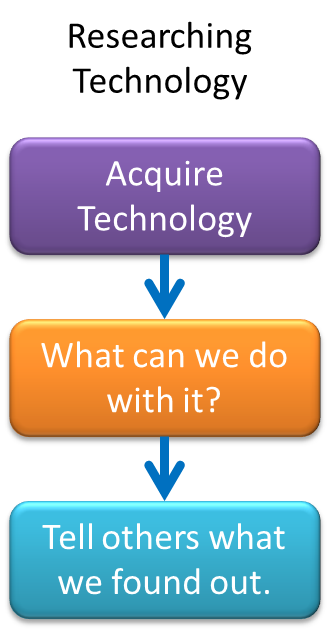
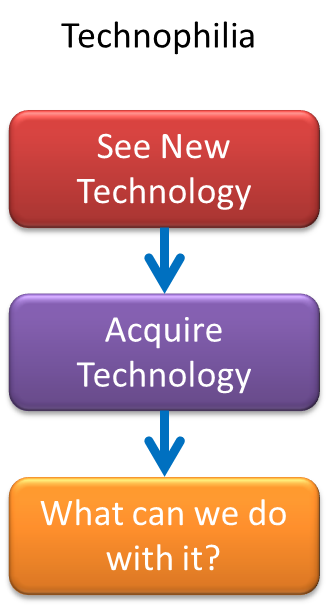
Anyone want to do the follow-up research?
Go figure…
$40-million donation fuels learning excellence | News & Events | University of Calgary.
Do you suppose this can help pull the UofC off the bottom of the list when it comes to student satisfaction?
Not unless they get rid of the current environment which favours pretense over substance, and which rewards faculty obedience and sycophants instead of individuality, excellence, and innovation.
The UofC does NOT participate in the Maclean’s University Student Survey. They stopped doing that when their results started being terrible. Much easier to claim you do great things for students when you can hide the evidence that it’s not actually true.
The truth is, you can teach in a leaky shack and still have students feel that their experience was a good one. On the other hand, you can surround them with the fanciest equipment in the world, but if the faculty don’t really give a sh&*, then you will get the same results as you got before.
By the way, many students can tell if you are only pretending to care, and some can even tell when they are being manipulated.
Cool.
Code Spells: Learn to Program by Crafting Your Own Magic Spells: BETA Release!.
This is a record of places I have bookmarked. (I also post them to Diigo, but since I don’t like to leave stuff only in the cloud, I am also keeping a copy here.
-
This View of Life: Primatologist Frans de Waal Responds To His New Atheist Critics
Having heard the protests by prominent atheists against the excerpt published by salon.com (under the inflammatory banner “Has militant atheism become a religion?”), let me say that the role of religion and atheism covers only about 10% of my book. It is an important part, hence the book title, but needs to be weighed against the rest of my message. In order to discuss the biological origins of morality, which is its central theme, I need to get two groups out of the way. One is fundamentalist religion, for which morality comes from God. The other are the neo-atheists who, by labeling themselves rational and everyone else irrational, have closed the door to open and tolerant debate. Calling believers idiots can impossibly be a good discussion opener. This explains my stance against militant atheism (a label that is not mine, but Dawkins’ by the way).
-
People who know me and follow my work know that I care about clarity of language. Without it, there cannot be real understanding and progress in education. So, it constantly irks me that people misuse the word “strategy” especially in talking about literacy. As the dictionary definition and comment, above, states, strategy differs from a tactic in that one develops an overall strategy to achieve a specific goal, within which appropriate tactics are used to achieve that success. A third element, skill, is needed to implement the strategy and tactics. In sum: Goal Strategy: overall approach to using all resources to achieve goal Tactics: specific “moves” designed to execute the strategy and honor the goal Skills: personal abilities needed to execute the tactics and strategy and to achieve the goal.
-
Common Questions: What Do You Call a Group of…?
So you’re stuck on 15 down (the collective name for a group of rhinos) in today’s crossword puzzle or you are writing the definitive novel about 17th century England and you need to know what they called a group of rooks, or perhaps you are into writing poetry and want to celebrate spring with a reference to larks. Whatever the motivating factor, we have received a spate of questions on collective nouns or group names for all sorts of critters. Perhaps the following, gleaned and compiled from several sources, will help. I’ve tried to indicate proper usage for terms that apply to a specific type of assemblage or to only a single gender or age, but some of my sources were fairly general. Where my sources disagreed on spelling, I let the majority rule. This listing exhausts the meager pile of references available at Northern Prairie Wildlife Research Center; if the animal that you are interested in doesn’t appear here, please, please, ask someone else, because I can’t help you! If you are interested in derivation of some of these names, or if you just want some fun reading, check out James Lipton’s book entitled “An Exaltation of Larks” 2nd edition (Penguin Books 1977). Birders interested in avian nomenclature should see Bruce Campbell and Elizabeth Lack’s “A Dictionary of Birds” (Buteo Books 1985). Happy Trivia, Dave Fellows
-
The Problems with Prezi | BrightCarbon
We understand that people are bored of PowerPoint, unable to harness it for effective presentation design, and looking to avoid Death by PowerPoint. We understand that in 2012 people don’t want to get up and present boring bullet points. For most though, Prezi is not the answer.
Cool. I’ve been saying this for years!!
Edward de Bono, business consultant and self-described “father of lateral thinking” has authored numerous works on creative thinking. de Bono calls moments of boredom “creative pauses,” which allows the mind to drift, and avails the person to new forms of input and understanding.
Boredom may be even more important for children than adults. Spending so much time on gadgets may “short circuit the development of creative capacity” in children, according to educational expert Dr. Teresa Belton. Other education experts similarly suggest that a child’s imagination and creativity is ultimately aided through bouts of boredom.
Earlier this year, Science Omega examined the benefits of boredom.
“Psychologists from the University of Central Lancashire (UCLan) have conducted research into the potential upsides of boredom and found that the time we spend daydreaming could improve our creative ability.”
The lead researcher on the UCLan study, Dr. Sandi Mann, emphasized boredom’s role in society:
“I do strongly believe that we shouldn’t be afraid of boredom and that we all – adults, children, workers, non-workers – need a little bit of boredom in our lives. Of course I’m not saying we should make people attend boring meetings for the sake of it, but allowing staff downtime where they can daydream and let their minds wander could possibly lead to benefits for an organisation.”
The mismatch between rising greenhouse-gas emissions and not-rising temperatures is among the biggest puzzles in climate science just now.
Well, DUH!!
via Climate science: A sensitive matter | The Economist.
Part of the problem with Climate Science is that many are so bent on “proving” their beliefs are correct, that they forget the most important principle of real science.
“No amount of experimentation can ever prove me right; a single experiment can prove me wrong.” – Albert Einstein
Used to be, all that was needed to put a theory in doubt was contradictory evidence, but Climate Scientists don’t seem to like that kind of science. If your models don’t fit, then you need a new theory, NOT simply a new way to fit odd data to the theory you like most.
So the explanation may lie in the air—but then again it may not. Perhaps it lies in the oceans. But here, too, facts get in the way. Over the past decade the long-term rise in surface seawater temperatures seems to have stalled (see chart 2), which suggests that the oceans are not absorbing as much heat from the atmosphere.
Say, WHAT?!
Since when did FACTS get in the way of SCIENCE? Isn’t that what science is supposed to be about?
When your models don’t fit the facts, IT MEANS YOUR MODELS ARE WRONG!!!!
Now, there is no doubt in my mind that the climate is changing, and it may even be the case that we have something to do with it (and could therefor, potentially do something to change it), today’s Climate Science has been reduced to politics and FAITH. People who question the models (regardless the reason) are uniformly accused of being “denialists”. That sounds far more like religion than science.
WAKE UP FOLKS! Climate Scientists have become so focused on proving their theory correct, that EVERYTHING now magically supports it. That’s NOT science. That’s faith. What’s worse, it is keeping people from doing the research necessary to figure out what’s REALLY going on.
Of COURSE these models are complicated. I’m quite confident that they aren’t nearly complicated ENOUGH. Just like the return of Aspen growth in Yellowstone Park turned out to be because the re-population by wolves ended up changing the Elk’s behavior, would it not make sense to see if maybe there were things beyond CO2 that were having an effect?
Good.
In a 6-to-3 decision in Kirtsaeng v. John Wiley & Sons yesterday, the U.S. Supreme Court said U.S. copyright owners may not stop imports and re-selling of copyrighted content lawfully sold abroad. The decision is a major victory for American consumers because it allows them to shop worldwide for their copyrighted content. More, it could have far-reaching implications in other industries including health care.
The first-sale doctrine, which the Court upheld in its decision, is a principle that the legal purchaser of a copyright-protected item may dispose of that property anyway he or she sees fit. The court ruled in favor of an immigrant scientist from Thailand, Supap Kirtsaeng, who imported textbooks lawfully printed overseas by a U.S. publisher and sold them on eBay.
While the court’s decision relied heavily on the statutory language governing the first-sale doctrine, the court also explained why the doctrine makes sense in today’s interconnected world where we easily buy and sell products across borders. The court correctly noted that consumers benefit from greater choice and lower prices when technology companies, libraries, used bookstores and retailers can import and sell products without having to ascertain that the U.S. copyright owner approves of each further sale. The court declared that “a geographical interpretation would subject many, if not all, of them to the disruptive impact of the threat of infringement suits.”
If the lower-court opinion in Kirtsaeng v. John Wiley & Sons had been allowed to stand, content providers could have skirted our copyright laws and reasserted control over the use of sold products simply by moving their manufacturing overseas. The court’s opinion, which reflects the advocacy of the tech and retail communities in support of Kirtsaeng, preserves the rights that the first-sale doctrine guarantees to manufacturers, retailers, libraries, consumers, and the public at large.